Local Strategies for Housing People Experiencing Unhousedness - Management and Financing Models, Cost Comparisons, and Integrated Approaches
In the research programme ‘Experimental Housing and Urban Development’ of the German Federal Institute for Research on Building, Urban Affairs, and Spatial Development (BBSR).
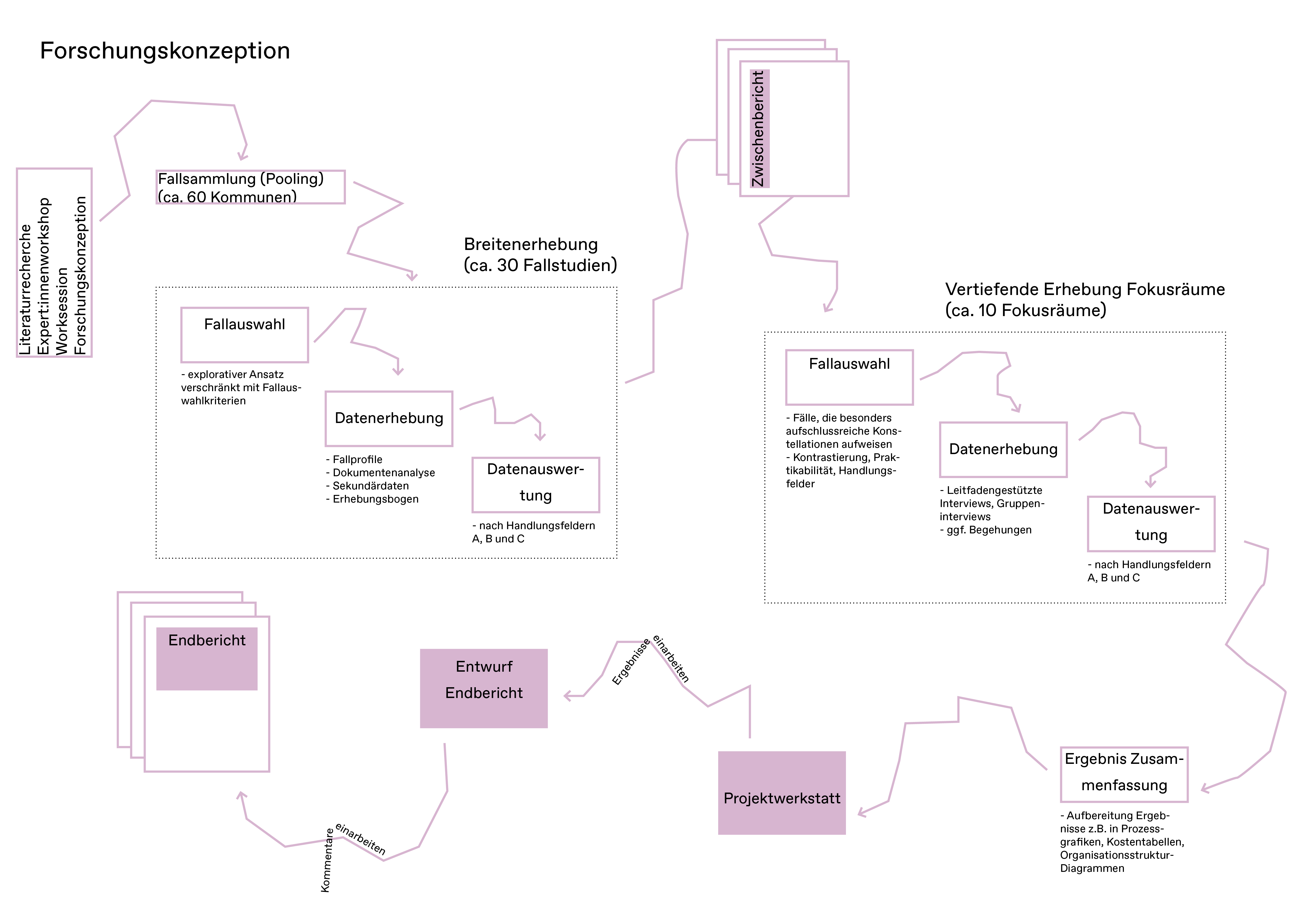
Since 2026, Gabu Heindl Architektur has been working on the research project ‘Municipal Strategies for Housing People Experiencing Homelessness — Operational and Financial Models, Cost Comparisons and Integrated Approaches’, in collaboration with projektbüro and coopdisco. This project forms part of the BBSR’s “Experimental Housing and Urban Development (ExWoSt)” research programme.
As well as examining the ways in which municipalities in Germany are tackling homelessness, the project is investigating financing and operational models for shelters and developing prototypical comparative analyses of housing versus prevention. Through the National Action Plan Against Homelessness, the federal government aims to eliminate homelessness in Germany by 2030. Municipalities play a central role in this effort, particularly with regard to integrated approaches and strategies for preventing housing loss, and in providing regulatory housing for homeless people.
Why do people often remain in emergency shelters for years, even though they are actually intended only for emergencies?
According to Destatis, 474,700 people in Germany were living in municipal shelters at the start of 2025. For many, short-term housing becomes a permanent situation.
The problem cannot be solved through social policy alone. This problem cannot be solved through social policy alone. It is also a matter for the housing market: there is a shortage of affordable housing, particularly for low-income households, single parents and large families. At the same time, the supply of public housing has been declining for years. Those affected often have little chance of finding housing on the open market, and local governments frequently lack the resources to swiftly transition people from temporary shelters to regular apartments.
Which local government strategies are truly effective? This is precisely what the new ExWoSt research project, ‘Local Government Strategies for Housing Homeless People’, conducted by the BBSR, is investigating.
Using approximately 30 municipalities as case studies, the project will systematically examine successful approaches. The focus is on preventing homelessness, operational and financing models for temporary shelters, the costs of various municipal strategies, and the interplay between homelessness prevention, emergency housing assistance and housing provision.
Client Federal Institute for Research on Building, Urban Affairs, and Spatial Development (BBSR)
Team
The research project is being carried out by the following offices:
project office Prof. Dr. Renée Tribble, Marieke Behne (M.A.)
coopdisco Martha Ingund Wegewitz (M.Sc.)
GABU Heindl Architektur Prof. Dr. Gabu Heindl, Helen Isabel Andres (M.Arch.)
Research Period March 2026 – ongoing
Here is the link to the research project (de).