Ro*sa Chance an der Schanze
Developer competition – An der Schanze | Site C | April 2019
An Emancipatory Housing Project Enabling Self-Determined Living, Intended for ALL – Especially Women, Children, FLINTs and Men
Women’s housing project
Women, although rarely visible, are often particularly affected by the difficulty of finding affordable housing. Women, especially single parents, older people, migrants and those with special needs have on average less financial means at their disposal.
[ro*sa] aims to provide self-determined housing for women who are otherwise more likely to be excluded from quality housing.
[ro*sa] Chance is a house, open to women, men and children, where contracts and design are in women’s hands; a building group made up of women, some intercultural, some women-loving, some single parents, some with special needs. Many are not well off, but they support each other in solidarity and strength. And through their communal living concept, they contribute to the neighborhood in solidarity.
What are the goals of [ro*sa] Chance?
The women’s housing project [ro*sa] Chance is a concept initiated by women (based on an idea by DI Pollak) in Vienna. Through equal cohabitation of older and younger women, children and cohabiting partners of different origins, diverse relationships and lifestyles are realized in a house community. Men are expressly welcomed as partners, but contracts are preferably concluded with women. Single women with their children are an important target group. Barrier-free living for older people and people with disabilities as well as ecological construction and management are important to us. Studios in the house enable self-employed women to form cross-professional synergies and to share office equipment…
Open space design and ecology
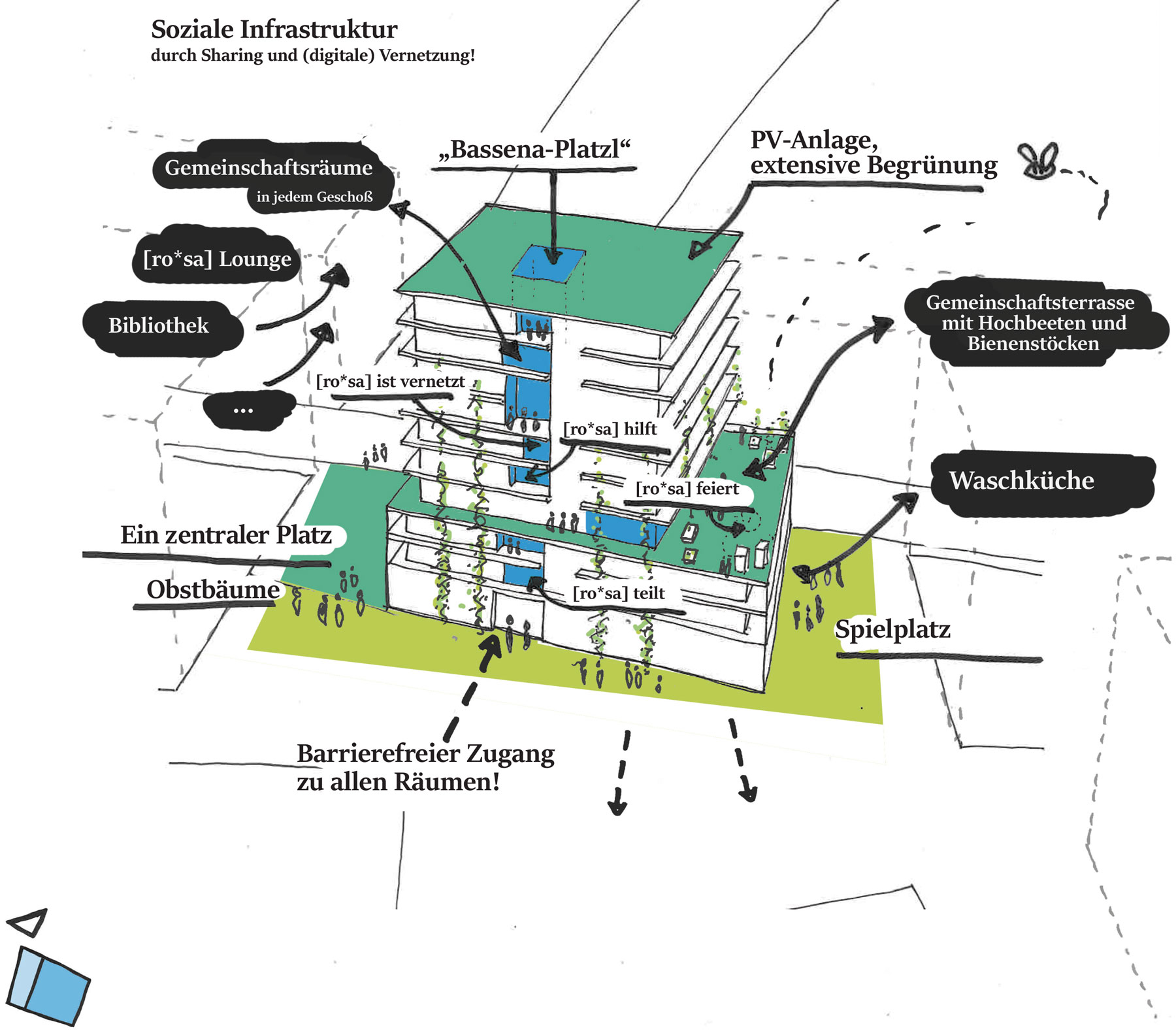
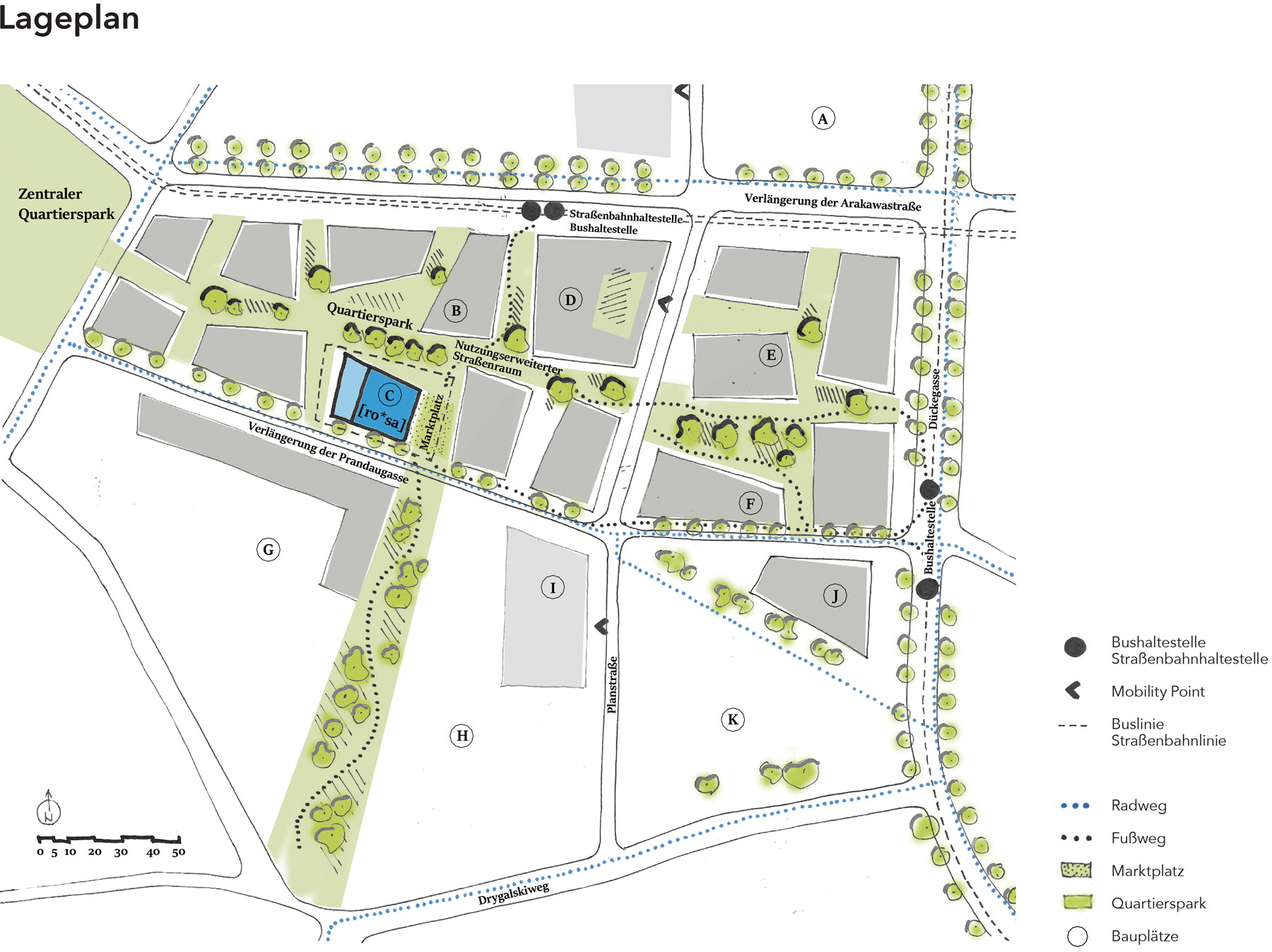
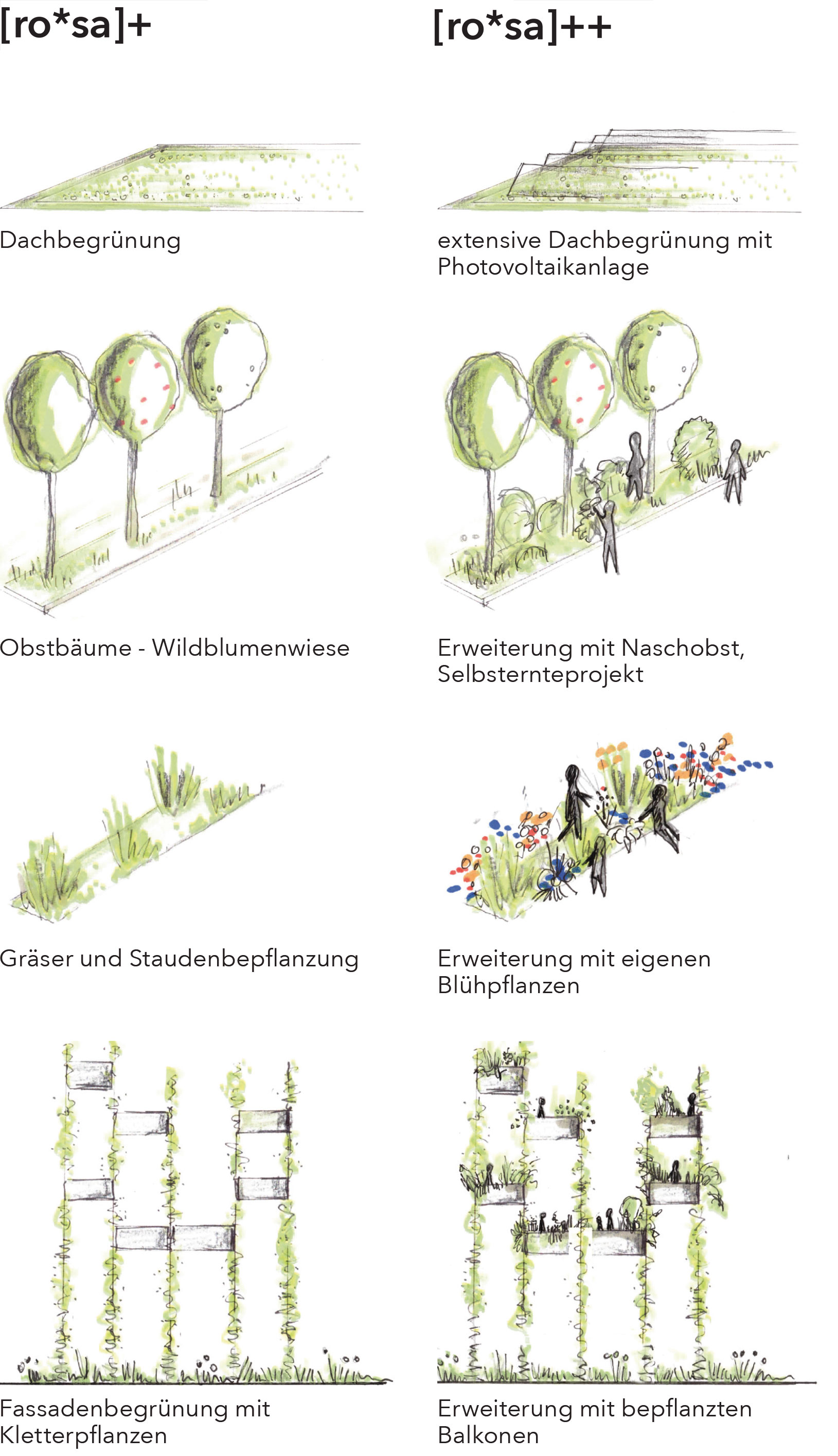
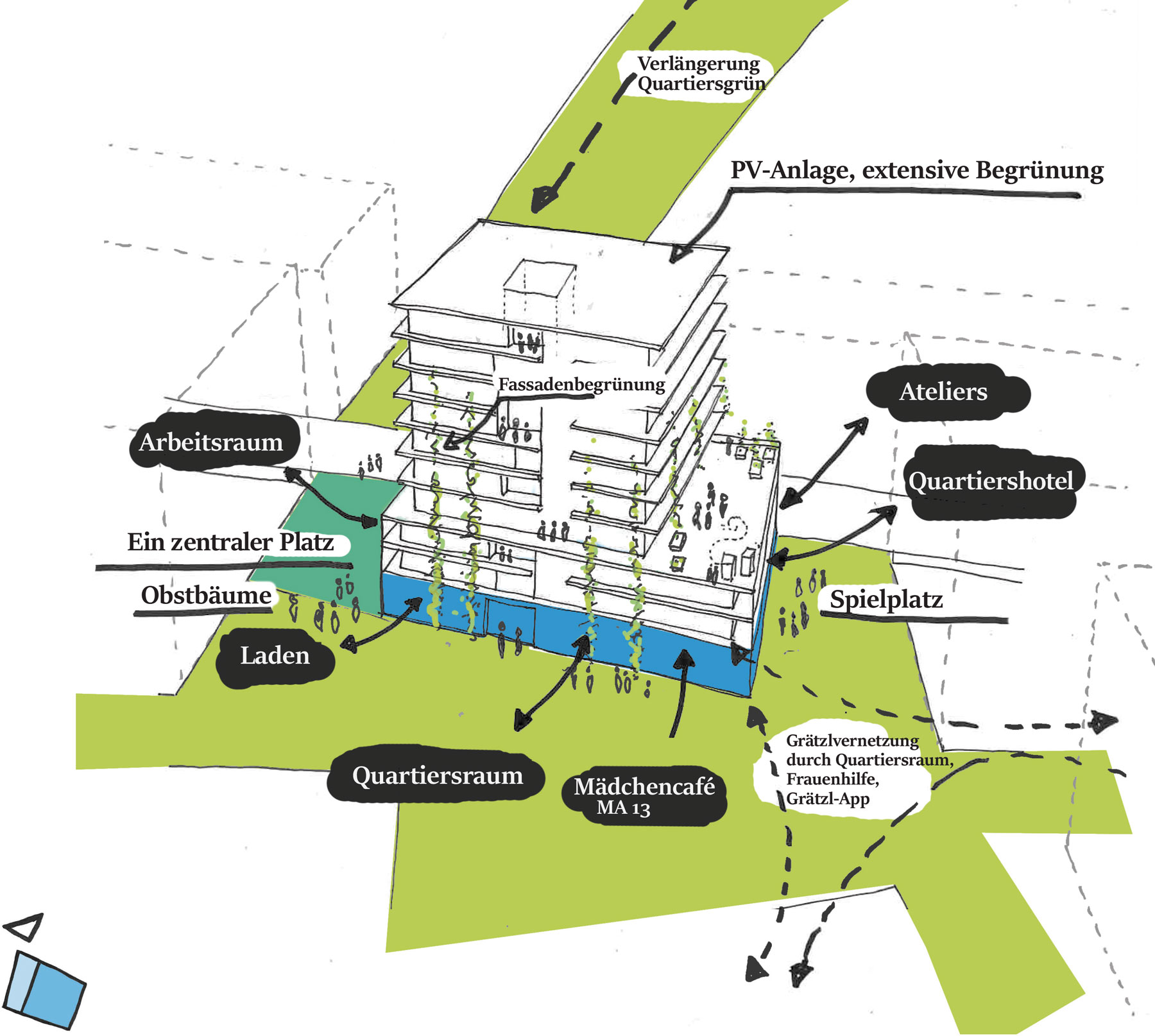
The urban plaza with seating areas, the play area in the west and the community terrace are characterized by a solid and robust green design with trees, grasses and perennials. The building greenery makes the house a green center in the neighborhood. The house blooms by itself ([ro*sa]) and even more by the gardening of the residents* of the building group and the neighborhood ([ro*sa]).
Building materials and facade insulation are chosen according to ecological criteria. Soil-bound and irrigated facade greenery of wild vine, ivy and akebie provides year-round greenery and an improvement in the microclimate.
Mobility
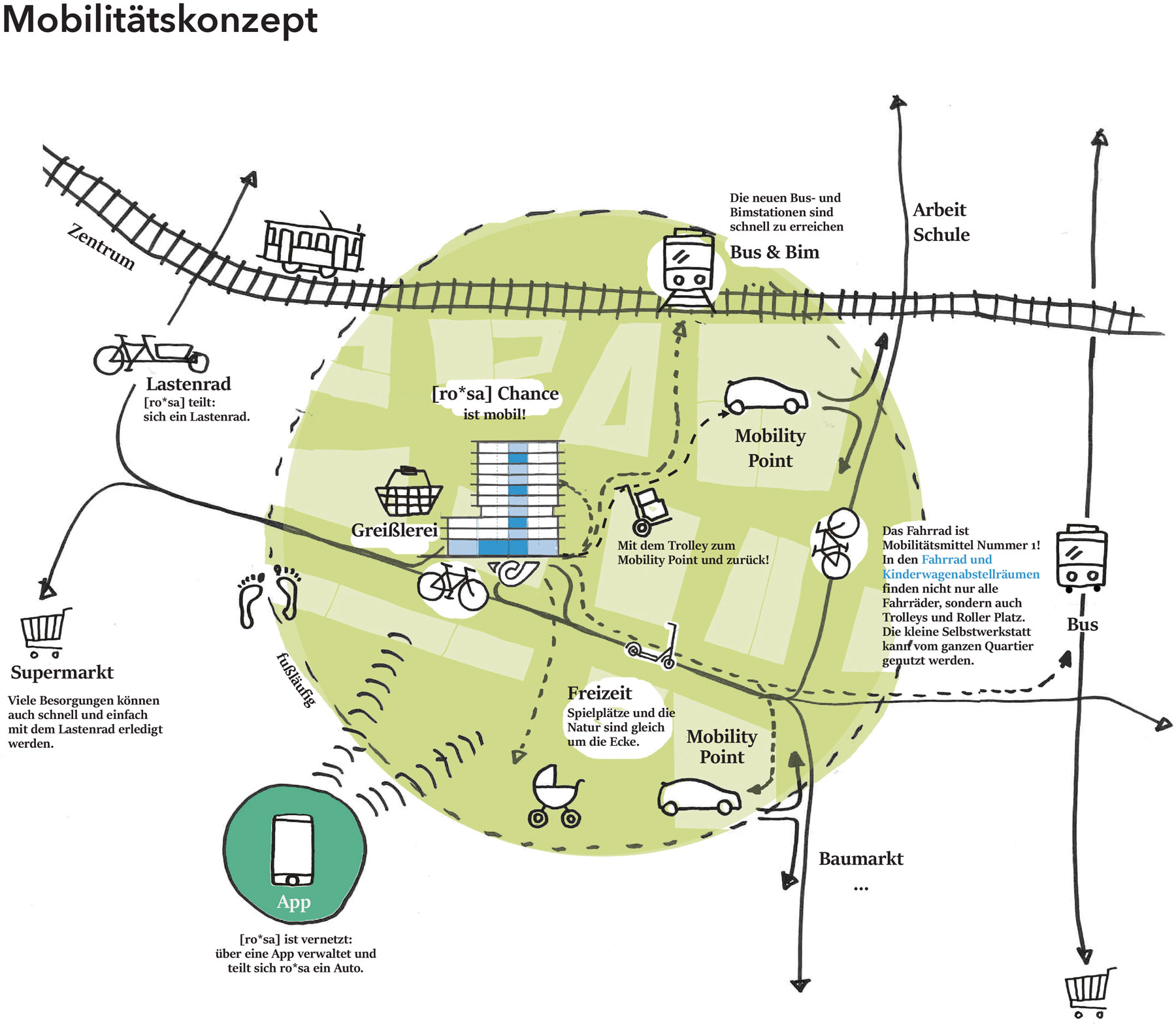
Residents* in the women’s housing project share a cargo bike, use public transportation, are connected and share a community car at Mobility Point or use car sharing. Bicycles are located on various floors, on the ground floor and outside the square. In addition, [ro*sa] Chance offers a small in-house workshop for bicycles, which can also be shared with the neighborhood.
Living
For the members of the women’s building group, the affordability of the apartments is the top priority. The consistently compact apartments are complemented by common rooms and the “Bassena-Platzl” on each floor, the “extended living room” including a community terrace on the 3rd floor and many common zones on the ground floor.
No condominium ownership is to be created in the collective women’s housing project.
Building and Project Group Concept
Building and Project Group Women’s Housing Project [ro*sa] Chance, MIGRA Gemeinnützige Wohnungsges.m.b.H. and GABU Heindl Architektur
Planning time spring 2019
Open space planner Maria Elisabeth Rief
Fire protection planner, Röhrer Bauphysik Andrea Kopper
Team GABU Heindl Architecture Gabu Heindl, Lisa Schönböck, Dorotea Mandić, Hannah Niemand, Stana Marjanović
MIGRA Gemeinnützige Wohnungsges.m.b.H. Alfred Petritz, Christopher Beigl
[ro*sa] Chance An der Schanze Ingrid Shukri Farag